Cycle Log 45
Images created with Nano Banana via Fal.ai, with prompt construction by GPT 5.4
The American Freedom Learning Network
A Proposal for a Free, Government-Certified National AI Learning System

Executive Summary
America has reached a point at which the old logic of education is no longer sufficient. The country still relies on degrees, transcripts, and institutional prestige as principal proxies for intelligence, competence, and readiness, even as employers routinely discover that many graduates require substantial retraining before they can perform well in the real world. At the same time, the quality of foundational learning in the United States remains uneven in ways that are deeply tied to geography, household income, and local institutional strength. Artificial intelligence now makes it possible to tutor, adapt, question, simulate, personalize, and measure learning at a scale and level of continuity that no traditional system can match on its own. President Trump’s April 23, 2025 executive order, “Advancing Artificial Intelligence Education for American Youth,” established a federal policy direction toward AI literacy, educator training, and an AI-ready workforce, but it did not itself create a national AI learning system, a national K-12 learning spine, or a universally accepted federal AI degree.
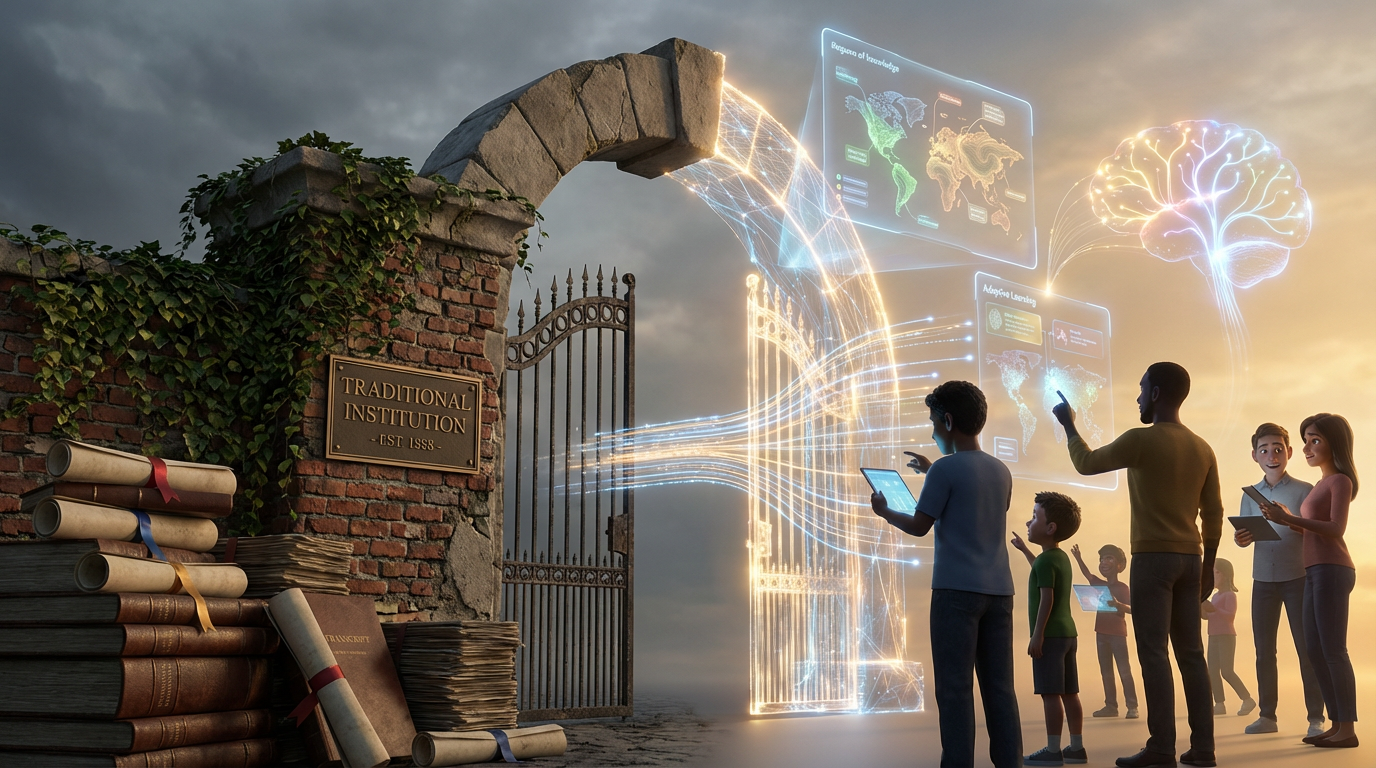
This paper proposes that the United States build a free, government-certified AI learning system that begins by strengthening and modernizing the academic core of K-12 education while also opening a first wave of higher-education and workforce pathways that can already be taught fully online with high confidence. The aim is not to abolish schools, universities, or teachers, nor to pretend that every profession can be educationally automated overnight. The aim is to replace the weakest function of the current system with something stronger: a public learning architecture that can deliver high-quality instruction, measure what a person actually knows, track how deeply they know it, test how well they retain it, observe how they perform under pressure, and reveal how their intelligence develops over time.
At the K-12 level, such a system could serve as a national academic layer, giving children in every region access to the same core quality of explanation, pacing, practice, and feedback regardless of district wealth or local instructional inconsistency. This would not eliminate the need for schools as places of supervision, socialization, safety, mentorship, and human development. But it could standardize and modernize the knowledge layer itself, raising the national floor of learning and automatically extending stronger instructional support into impoverished and structurally underserved communities. At the higher-education and workforce level, the system could move first into fields whose educational core is primarily cognitive and digitally assessable, such as business, communications, analytics, software, IT, technical writing, operations, and related domains, while excluding professions that still depend on physical demonstration, clinical placements, or regulated in-person practica.

The core innovation is the living learning record, of which the living degree is the higher-education expression: a dynamic competency map rather than a static transcript. Instead of merely recording that a learner passed through a sequence of courses, the system would record demonstrated mastery, retention, communication ability, project performance, oral defense, assessment integrity, and cross-domain growth. It would allow employers to see what a person can truly do, universities to scout patterns of intelligence in motion, and learners to carry forward a lifelong record of real development rather than a disconnected stack of paper credentials. In that sense, it is not merely a college credential. It is a public interface for human capability across the full arc of life.
A realistic planning estimate is that roughly 35 to 50 percent of full degree pathways are strong candidates for an initial AI-driven public credential model, meaning that within those pathways the instructional layer can be delivered almost entirely through AI. A separate, broader estimate is that roughly 60 to 75 percent of total coursework content across higher education is already teachable in an AI-native format, even when the full degree itself still cannot be completed entirely through AI because it depends on labs, clinicals, field placements, licensure rules, or other in-person forms of validation. K-12 core academic instruction is in some ways even more straightforward, because the knowledge layer is more standardized and less entangled with specialized licensure structures. These figures are strategic estimates, not official federal numbers. Their purpose is not to create false precision, but to show that the addressable opportunity is already large enough to justify national action.
The paper argues that the proper build path is not to legislate prestige into irrelevance, but to construct a superior trust system for learning. If the instruction is genuinely high quality, if the assessments are secure, if the learning record is richer than a résumé, and if the framework is validated by human experts, then employers, universities, and public institutions will move toward it because the signal is better. In that sense, the American Freedom Learning Network would not merely lower cost. It would help redefine what counts as educational proof, beginning in childhood, extending through higher education, and continuing as a lifelong record of growth.
Introduction
America does not merely have a tuition problem. It has a trust problem.

The United States has built an educational order in which institutional passage often stands in for demonstrated understanding. Degrees, transcripts, and prestige still carry enormous social power, but they are often indirect measures of what people can actually do, how deeply they understand it, and how well that knowledge endures over time. At the same moment, the quality of foundational learning remains uneven across the country, with opportunity still shaped too heavily by geography, income, and local institutional strength.
Artificial intelligence changes the landscape because it makes a different kind of educational system possible: one that can adapt, explain, test, observe, and measure learning continuously rather than episodically. This does not automatically create legitimacy, but it does create the possibility of a richer, cheaper, and more truthful architecture of educational proof.
The question, then, is no longer whether AI can play a serious role in education. It can. The question is whether the United States is willing to build a public learning system that uses AI not only to teach, but to make human capability more visible from childhood through adulthood.
This paper argues that it should.
What Trump Proposed, and How to Build on It

Any serious proposal should distinguish between a first step and the larger system that step can make possible.
President Trump’s executive order of April 23, 2025 was an important opening move. By promoting AI literacy, educator training, and early exposure to AI concepts, it established AI education as a national priority and framed it as part of preparing an AI-ready American workforce. In doing so, it signaled that artificial intelligence should be cultivated as a national capability, not treated only as something to fear or regulate.
That order opened the door. It did not yet build the full structure.
It did not create a national AI learning system, a national K-12 instructional spine, or a universally recognized federal AI degree. Nor did it replace the existing accreditation framework, under which recognized accrediting bodies and accredited institutions remain central to formal degree legitimacy in the United States.
That is not a criticism of the first step. It is the natural next stage of the direction it set.
The task now is to build forward from that foundation: a free, public, AI-native learning system that strengthens K-12 instruction, opens first-wave higher-education and workforce pathways in AI-teachable domains, provides secure verification, operates under expert-reviewed standards, and generates a living record of competence that families, educators, employers, and universities can actually use.
That is how an early policy signal becomes a durable national system.
The Core Problem: The Bottleneck Is Verification, Not Information

America does not suffer from a raw shortage of information. Textbooks exist. Public-domain material exists. Open educational resources exist. AI can generate explanations, scaffolds, examples, quizzes, and practice sequences at scale. The real bottleneck in modern education is not simple content access. It is trust.
Who verifies that the material is accurate and sufficient?
Who verifies that the learner truly understood it?
Who verifies that the mastery is durable rather than temporary?
Who verifies that the record can be trusted by a family, an employer, a university, or a government agency?
Traditional education answers these questions through a bundle of institutional mechanisms: teacher authority, faculty authority, course sequences, grades, transcripts, accreditation, and degrees. That bundle has social power, but it is also blunt. It tells the world that a learner completed a structured path. It does not necessarily tell the world how much of the material was retained, how well the learner performs in authentic tasks, how quickly they adapt, or how their reasoning develops over time.
An AI-native public learning system can do better precisely because it can observe learning continuously rather than episodically. It can test the same concept at multiple intervals. It can compare first-pass and revised responses. It can measure speed of adaptation, quality of explanation, transfer of knowledge to adjacent domains, and resilience after error. It can distinguish between memorization and structural understanding. It can become not just a content engine, but a verification engine.
This is the central insight of the proposal. The goal is not simply to generate lessons more cheaply. The goal is to build a stronger national instrument for measuring real competence from childhood through adulthood.
Why America Needs a Government-Certified AI Learning System
America needs a government-certified AI learning system because the existing educational order too often combines uneven foundations, high cost, weak transparency, and delayed proof.
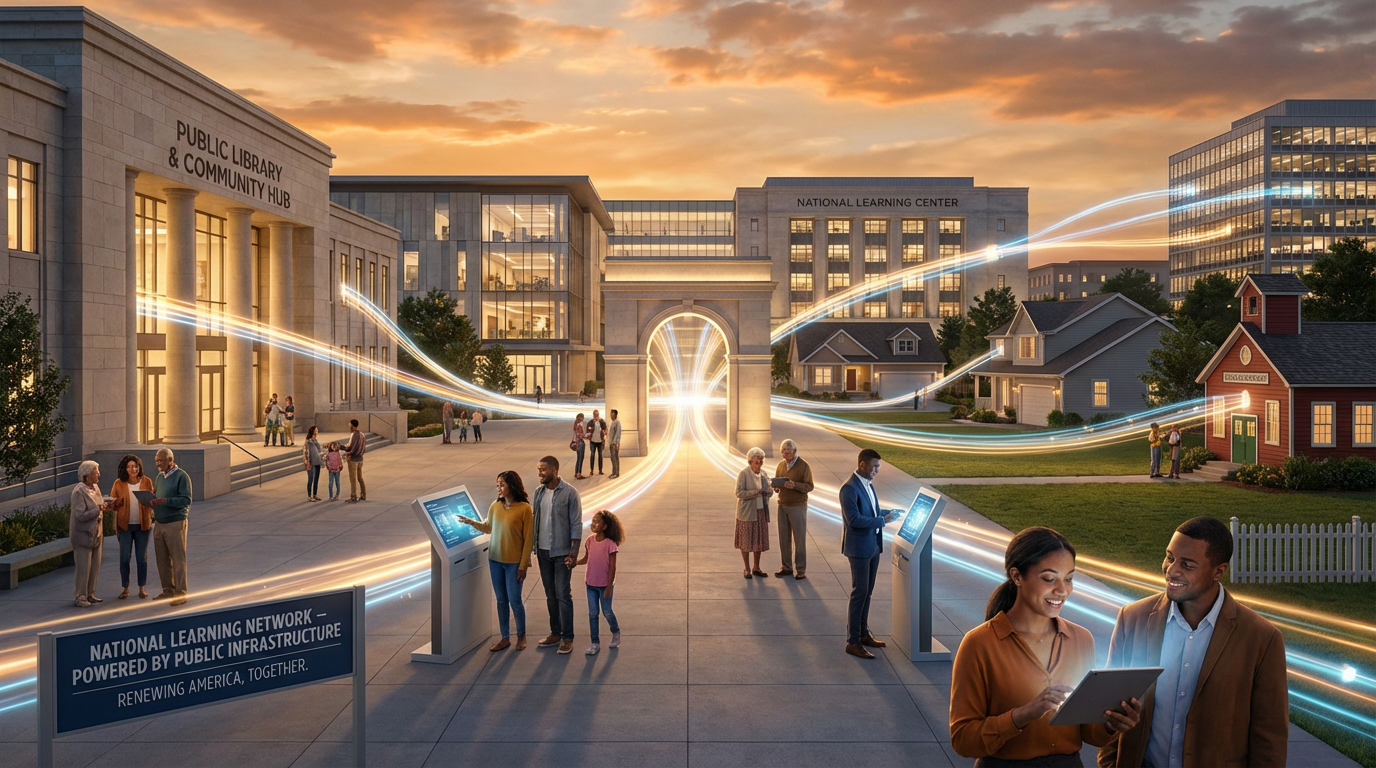
For decades, degrees have functioned as a signaling device. In many cases they still work reasonably well. Elite institutions, strong programs, and serious students often produce excellent outcomes. But the system as a whole has become swollen with cost and uneven in meaning. Students frequently spend years and large sums of money to acquire credentials whose labor-market value varies wildly by field, institution, and local conditions. Employers, meanwhile, still retrain many graduates from scratch. At the same time, children in poorer districts are often given weaker instructional inputs at the very stage when strong foundations matter most. This means the country is not only paying too much at the top. It is also failing to standardize quality at the base.
A public AI learning system would not solve every problem in education, but it would attack several of the most wasteful distortions directly. It would allow the government to strengthen and modernize the instructional core of K-12 education. It would allow the government to offer high-quality instruction for free in higher-education and workforce fields that are already teachable online. It would lower the entry cost of retraining to nearly zero aside from time and attention. It would create a national baseline for measurable competence. It would give rural learners, low-income adults, military veterans, formerly incarcerated people, late bloomers, and highly accelerated teenagers access to serious educational pathways without first demanding that they buy their way into a prestige pipeline.
Most importantly, it would shift education away from a scarcity economy of symbolic status and toward a reality economy of demonstrated understanding.
The Real Build Path

The proposal will fail if it is framed as a fantasy of immediate total replacement.
The government cannot simply declare that a new public AI credential is automatically superior to every school transcript, college degree, or university pathway in the country and expect students, parents, employers, accreditors, boards, and institutions to fall into line. Trust does not move by proclamation alone. It moves when a system produces better signal, stronger outcomes, and a more legible record of real learning.
The real build path is straightforward in principle, even if demanding in execution.
Build the instructional layer.
The government first builds a high-quality, AI-native instructional layer across core K-12 subjects and selected higher-education and workforce domains that are already teachable fully online with high confidence.Validate the standards.
Subject-matter experts then validate the curriculum, the assessments, and the mastery standards so that the system rests on reviewed and defensible educational foundations.Secure the trust layer.
The system establishes secure identity verification and integrity protocols for all official credential-bearing work, while preserving open or ghost-mode access for informal learning and exploration.Measure real performance.
Learners are evaluated through a mixture of exams, oral defenses, portfolios, performance tasks, retention checks, and other adaptive measures appropriate to age and field.Create the living record.
The results are stored not as a dead transcript, but as a living competency map that can begin in childhood and continue across a lifetime.Make the record legible.
That living record is then made legible to families, educators, employers, universities, and public institutions through clear interfaces and trusted standards, with privacy and visibility calibrated to age and use case.Build pathways around the stronger signal.
Once the signal is trusted, articulation, hiring, talent-scouting, and degree-conversion pathways begin to develop around it.
In this model, the system does not win by outlawing existing prestige structures. It wins by making real competence more visible than prestige, first in the classroom, then in higher education, and eventually across the labor market as a whole.
The Living Learning Record and the Living Degree
The core product of this public AI learning system is not merely a course. It is the living degree, or more broadly, the living learning record.
A traditional degree is generally static. It tells the world that a person completed a package of institutional requirements at some point in the past. It does not update. It does not show whether the knowledge endured. It does not show how the learner has continued to grow. A school transcript is similarly narrow. It records courses, grades, and sequence completion, but reveals little about retention, cross-domain transfer, reasoning quality, or the actual shape of a mind in motion.
A living learning record would function differently. It would be an evolving map of verified knowledge, retained mastery, demonstrated skill, intellectual development, and growth over time. It would show not only what a learner has completed, but how deeply they understand it, how recently they have demonstrated it, how strongly they retain it, how they perform in real tasks, how well they explain it, how quickly they improve, and how they connect knowledge across domains.
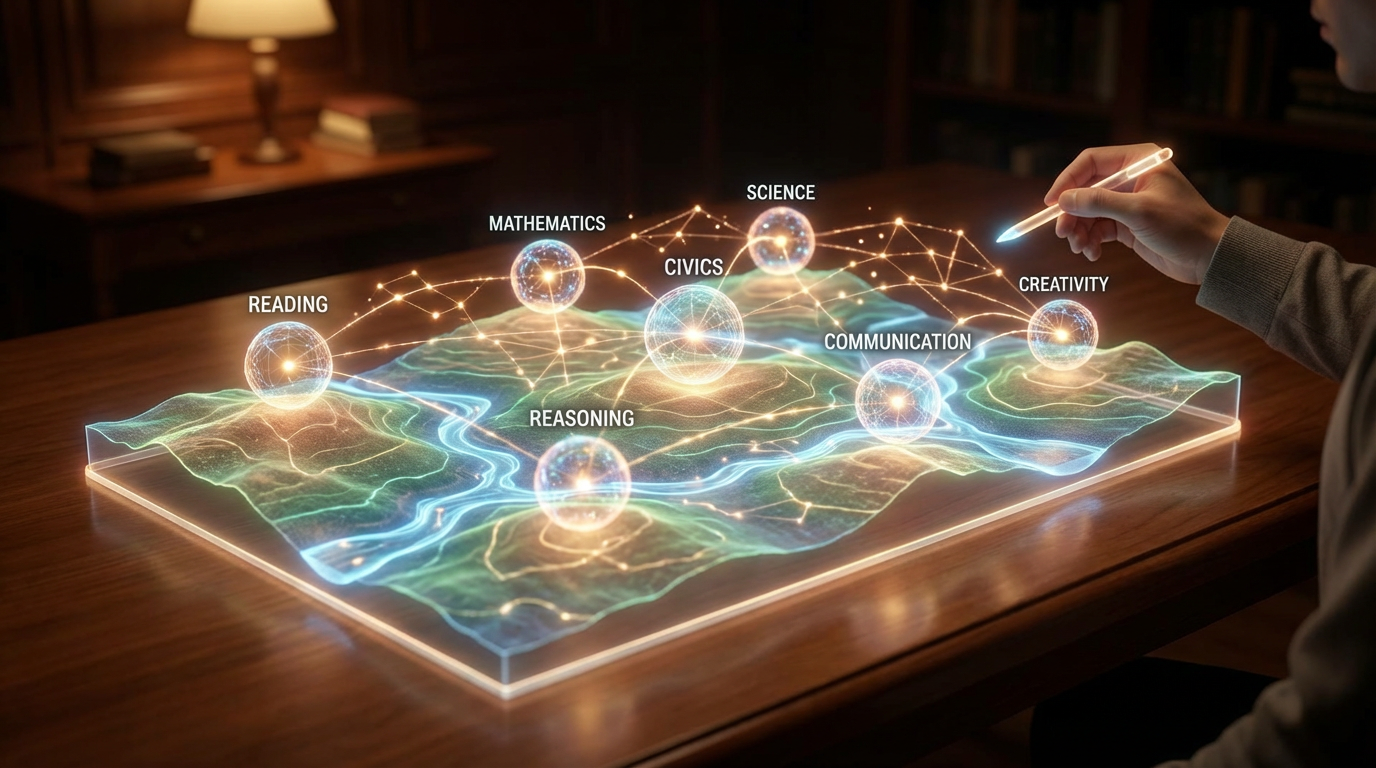
For younger learners, this record could begin as a developmental map of foundational mastery across reading, writing, mathematics, science, civics, computing, and communication. It could also reflect pace, retention, problem-solving patterns, and areas of unusual strength or needed support. For older learners, it could mature into a professional and academic competency map that includes oral defense, portfolio work, advanced reasoning, project performance, and cross-domain synthesis. In either case, the principle remains the same: education should be recorded as living evidence of understanding rather than as a static proof of passage.
This record should not resemble a dusty list of course titles. It should resemble a navigable landscape. A parent or teacher should be able to see where a child is strong, where they are struggling, how their learning is developing over time, and where intervention or acceleration may be appropriate. An employer should be able to inspect a learner’s core competencies, recent performance, assessment integrity, and rate of growth. A university should be able to identify patterns of unusual promise: speed, originality, retention, cross-domain synthesis, disciplined improvement, and demonstrated readiness for advanced opportunity. The learner themselves should be able to see their own education not as a pile of disconnected classes, but as a living architecture of understanding.
That is what makes the idea powerful. It is not just cheaper education. It is better educational evidence across the full arc of life.
What the Current Degree System Misses
The current educational model often misses what matters most outside the institution, and in many cases, long before the institution.

At the higher-education level, it rarely measures long-horizon retention in a serious way. It often ignores oral defense except in highly specific programs. It seldom captures how well a learner can transfer knowledge from one field into another. It tends to focus on narrow course-contained assessment rather than the broader shape of reasoning over time. It often confuses compliance with understanding, attendance with ability, and short-term performance with durable mastery.
At the K-12 level, the weaknesses begin earlier. Students are often advanced by age and schedule rather than true mastery. Large differences in district quality can distort access to strong explanation, feedback, and pacing. Standardized testing captures only a narrow slice of understanding and often misses the deeper question of what a student actually knows, retains, or can do with the knowledge once the test is over.
A public AI learning system could measure these dimensions more effectively across both stages. It could stage dynamic oral examinations with variable prompts. It could resurface old concepts months later to test retention. It could measure the quality of revision after feedback. It could use branching case studies, simulations, structured mini-games, and adaptive questioning to assess creative problem solving. It could track not only whether a learner arrives at a correct answer, but how they explain it, how they recover from error, how their pace changes over time, and whether they can apply the principle in a new context.
This matters because real competence is not a single event. It is a pattern. A stronger public learning architecture could observe that pattern directly, beginning in childhood and continuing through higher education and adult retraining.
First-Wave Fields: What Can Be Fully AI-Taught Now
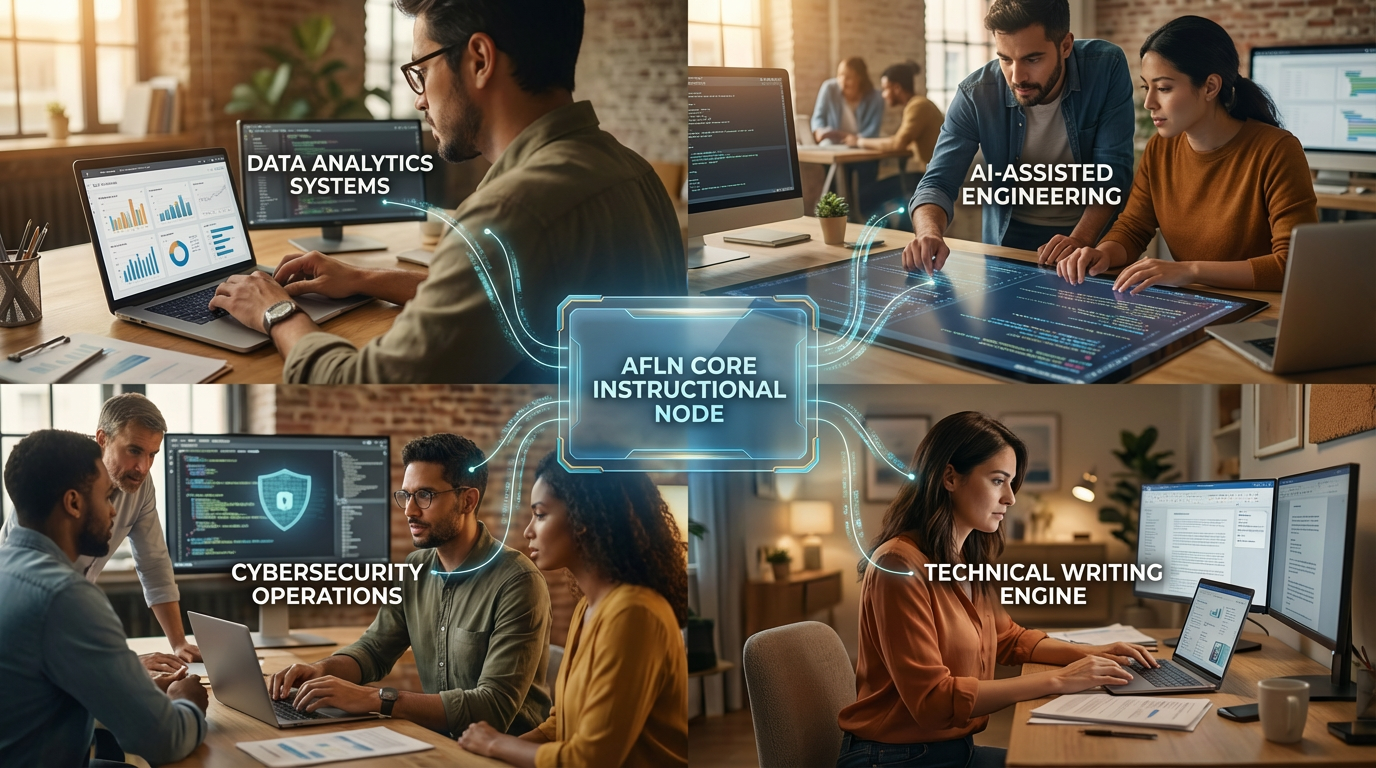
The system should begin with discipline. Its first formal credential-bearing phase must be limited to domains whose educational core can already be taught fully online and assessed with high confidence, without mandatory physical labs, clinical placements, student teaching, or licensure-bound practica.
That distinction applies differently at different levels of the educational system.
At the K-12 level, the academic knowledge layer across core subjects is already highly suitable for AI-native delivery. Reading, writing, mathematics, science, history, civics, language learning, and much of computing and general academic practice can be taught, reinforced, and measured with high reliability through adaptive AI systems. This does not mean that AI can replace the entire institution of school, which also includes supervision, social development, mentorship, physical activity, emotional support, and community life. It means that the instructional layer of K-12 knowledge can be modernized, standardized, and delivered at a far higher level of consistency than the country currently provides.
At the higher-education and workforce level, the strongest first-wave candidates are cognitive fields with heavily digital workflows and clear assessment structures. Business administration, project management, communications, digital marketing, technical writing, data analytics, software development, quality assurance, IT support, systems fundamentals, cybersecurity fundamentals, bookkeeping, operations, supply chain coordination, HR operations, recruiting operations, legal research support, and liberal studies all fall into this category.
These domains are not trivial. They represent a significant share of the modern knowledge economy. They are also the fields in which AI-native teaching, iterative practice, and digitally verifiable assessment can already operate with high maturity.
The first formal credential-bearing higher-education phase should not include fields such as nursing, medicine, dentistry, teacher licensure, counseling licensure, social work licensure, aviation, welding, and similar professions where physical competence, supervised placements, or regulatory structures remain central. That boundary is not philosophical. It follows from the current realities of accreditation, licensure, and public safety.
There is no official federal chart that tells us exactly what percentage of U.S. degree pathways could be brought first into a fully AI-driven public credential model, and any claim of exact precision would be false confidence. A realistic planning estimate is that roughly 35 to 50 percent of full degree pathways are strong candidates for the first formal higher-education phase, meaning that within those pathways the instructional layer can be delivered almost entirely through AI. A separate, broader estimate is that roughly 60 to 75 percent of total higher-education coursework across all programs is already teachable in an AI-native way, even when the full degree itself still cannot be completed entirely through AI because it depends on labs, clinicals, field placements, licensure rules, or other in-person validation.
Put simply: the smaller number refers to whole degree pathways that can be taught nearly end-to-end by AI, while the larger number refers to the total amount of coursework AI can teach across higher education as a whole. K-12 core academic instruction is in some ways even more straightforward, because the knowledge layer is more standardized and less entangled with specialized licensure structures. It is entirely feasible and reasonable to suggest that the vast majority of all K-12 core instruction can be reliably instructed with an AI instructor. These figures should be stated as strategic estimates, not as fixed statutory truths. Even at the lower end, the opportunity is massive.
Identity Verification, Integrity, and Ghost Mode

Any public credentialing system lives or dies by trust in its assessments. But a national AI learning system must handle that trust differently at different stages of life.
For formal higher-education, workforce, and other credential-bearing pathways, the system should include robust identity proofing, device trust, phone and camera verification, secure testing environments, suspicious-behavior detection, and detailed integrity logs. High-stakes milestones should also include oral-defense checkpoints or similar live interactions to reduce the possibility of impersonation or automated cheating.
For K-12 learners, the architecture should be more proportionate. Most day-to-day instructional use should not feel like a high-security licensing exam. Younger students need a trusted learning environment, not a surveillance chamber. In primary and secondary education, identity and integrity systems should therefore be calibrated to age, school setting, and purpose. Classroom learning, home practice, and formative exercises can operate with lighter-touch controls, while official advancement markers, mastery benchmarks, accelerated-placement pathways, and other high-stakes uses can require stronger verification.
This is not exotic. Identity verification systems already exist across finance, hiring, and remote testing. What matters is integrating them properly into the architecture of the platform so that the public record remains defensible without making the learning experience hostile.
At the same time, the platform should not be built like a fortress that scares away the people it aims to serve. A dual-mode system is therefore essential.
In verified mode, a learner’s progress counts toward official mastery records, public credentials, school or university recognition, and employer visibility where relevant.
In ghost mode, a learner can explore courses, test ideas, and use the tutoring system freely without attaching those interactions to an official profile.
This distinction matters because it lowers fear and expands participation. It allows the system to function both as a formal credential engine and as an open national learning garden.
Privacy and Visibility
A living learning record is powerful, and power requires limits.

Adult learners should have the option to make portions of their educational record visible, shareable, and even publicly celebratory. Educational accomplishment is not something to hide. For many people, displaying a verified map of competence will itself become a meaningful form of earned status and a practical tool for employment, collaboration, and academic opportunity.
But official records should still default to privacy rather than universal exposure. This is especially important for minors. A system that makes learning more visible does not need to become a surveillance machine in order to succeed.
For children and teenagers, privacy protections should be stronger, with access structured primarily around families, authorized educators, and approved institutional uses. For adults, the model can be more open, but still permission-based. The proper balance is controlled visibility: private by default, public by choice, scouting access by opt-in, and employer, university, or institutional access based on permissioned sharing.
That model preserves legitimacy while still allowing the platform to become a powerful engine of recognition.
Expert Review and Government Badge Accreditation

Artificial intelligence can generate extraordinary amounts of educational material quickly. It can draft lessons, produce practice sequences, vary explanations, generate adaptive remediation, and tailor instruction to different ages and levels. But AI generation alone is not enough for a national public learning system.
The coursework and mastery frameworks must be validated by human experts.
At the K-12 level, this means expert review of core academic standards, developmental appropriateness, assessment design, and subject sequencing across reading, writing, mathematics, science, civics, computing, and related subjects. At the higher-education and workforce level, it means competency frameworks, review panels, assessment standards, revision cycles, and field-specific approval criteria for each credential-bearing pathway.
Government certification should attach not to raw AI output, but to a mastery pathway that has been reviewed, approved, and periodically audited by qualified human beings.
This distinction is critical. The government badge must mean more than “the model generated something plausible.” It must mean that the pathway reflects rigorous standards, stable quality, developmental or professional appropriateness, and defensible educational design.
In this framework, teachers, professors, practitioners, and subject-matter experts are not obstacles to scale. They are the guardians of legitimacy.
OpenAI as Foundational Infrastructure

If the United States were to build a national AI learning system of this kind, OpenAI stands out as the strongest early infrastructure partner.
It has already demonstrated a clear movement beyond static answer generation and toward guided learning, adaptive tutoring, and interactive educational support. Tools such as Study Mode point in exactly the direction a public learning architecture would need to go: not merely delivering information, but helping learners reason through it, retain it, and build real understanding over time. Just as importantly, OpenAI has already shown that it can operate in complex institutional environments and at national scale, which matters enormously for any system meant to serve millions of learners across K-12, higher education, workforce retraining, and lifelong learning.
That makes OpenAI a natural candidate not just to participate in such a system, but to help power its first serious implementation.
A national learning platform would require more than a chatbot. It would require adaptive instruction, durable assessment logic, guided mastery pathways, multimodal tutoring, writing and reasoning evaluation, age-sensitive learning design, and the ability to serve as a flexible intelligence layer across many domains. OpenAI is one of the few organizations that is already visibly building toward that full stack. In practical terms, it is closer than most to being able to function as the cognitive engine of a modern public learning system.
At the same time, the public framework itself should remain standards-based and under governmental control. The United States should define the competency standards, assessment structures, privacy requirements, record formats, approval criteria, and interoperability rules. In that model, OpenAI could serve as the flagship instructional and reasoning engine inside a public system whose rules remain accountable to the national interest.
That balance is important. It allows the government to move quickly by partnering with the most advanced and education-ready AI infrastructure available, while still ensuring that the public learning spine does not become structurally dependent on any one company forever.
OpenAI is therefore best understood not as the owner of the system, but as its most compelling first builder and most capable early engine.
Other firms and open-model ecosystems could still contribute over time, especially in specialized tooling, subject-specific simulation, local deployment, accessibility layers, or competitive benchmarking. But if the goal is to launch a serious national learning architecture in the near term, OpenAI is the clearest place to start.
University Scouting and the New Meaning of a Degree
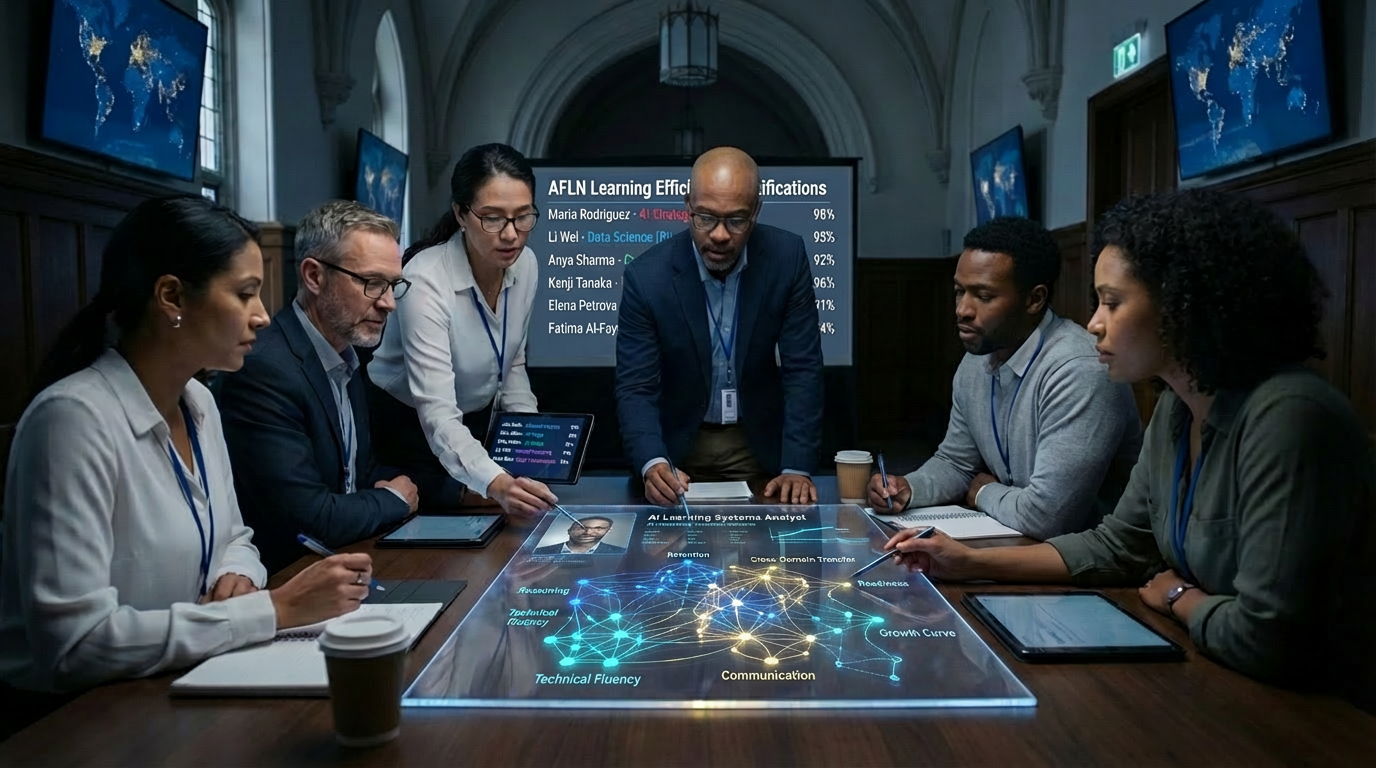
One of the most important consequences of this system is that it would not need to destroy universities in order to transform them. It would change their incentives so powerfully that many of them would begin adapting to it on their own.
Universities compete for talent, prestige, future distinction, and association with exceptional people. They do not want to discover important minds late if they could have recognized them early. Once a national learning map begins to show real proficiency, real retention, real cross-domain ability, and real intellectual growth, universities will have a strong incentive to scout learners who choose to make those records visible. They will not do this as charity. They will do it because it becomes one of the most efficient ways to identify future founders, researchers, scholars, inventors, and public figures before rival institutions do.
That changes the pipeline.
Instead of waiting for talent to crawl through the old sequence of district quality, test performance, admissions packaging, institutional sorting, and delayed recognition, universities would be able to identify unusual minds much earlier and pull them directly into advanced study, accelerated programs, research tracks, scholarship pipelines, or formal degree pathways. In that sense, the system does not merely widen access. It compresses the distance between demonstrated ability and institutional recognition.
Over time, this would also change the meaning of the university degree itself. Rather than serving mainly as proof that a person completed a long institutional passage, the degree could increasingly become a formal stamp of recognized understanding. It becomes less a receipt for time spent inside an institution and more a seal of validated mastery.
That is not the destruction of the university. It is the refinement of its highest function: recognizing, cultivating, and advancing genuine human capability.
Employer Interface: From Credential Guessing to Capability Signal

Employers do not ultimately care about the romance of the transcript. They care about whether a person can do the work, learn the next layer quickly, communicate clearly, solve problems under pressure, and be trusted.
The employer-facing interface should therefore be simple, legible, and rich in useful signal. It should show core competencies, depth of mastery, recency of demonstration, performance under pressure, quality of communication, retention stability, integrity of assessment, portfolio artifacts where relevant, and rate of improvement over time.
A living competency record gives employers something the current system rarely provides: an evidence-rich view of what a person can actually do and how quickly that person is still growing. That is far more valuable than trying to infer ability from school name, GPA, and interview charisma alone.
This is a quiet revolution of the entire system of bringing on new talent.
Instead of waiting for talent to appear through narrow résumé filters and prestige bottlenecks, employers could identify capable people directly from visible learning maps and recruit them into internships, apprenticeships, technical roles, leadership tracks, or specialized training pathways. In that sense, the platform does not merely help people look qualified. It makes real capability easier to find.
Done properly, the AI learning system does not merely produce more credentialed people. It produces more legible people, and legibility at scale changes who gets seen.
Educational Quality, Industry Input, and the New Talent Pipeline
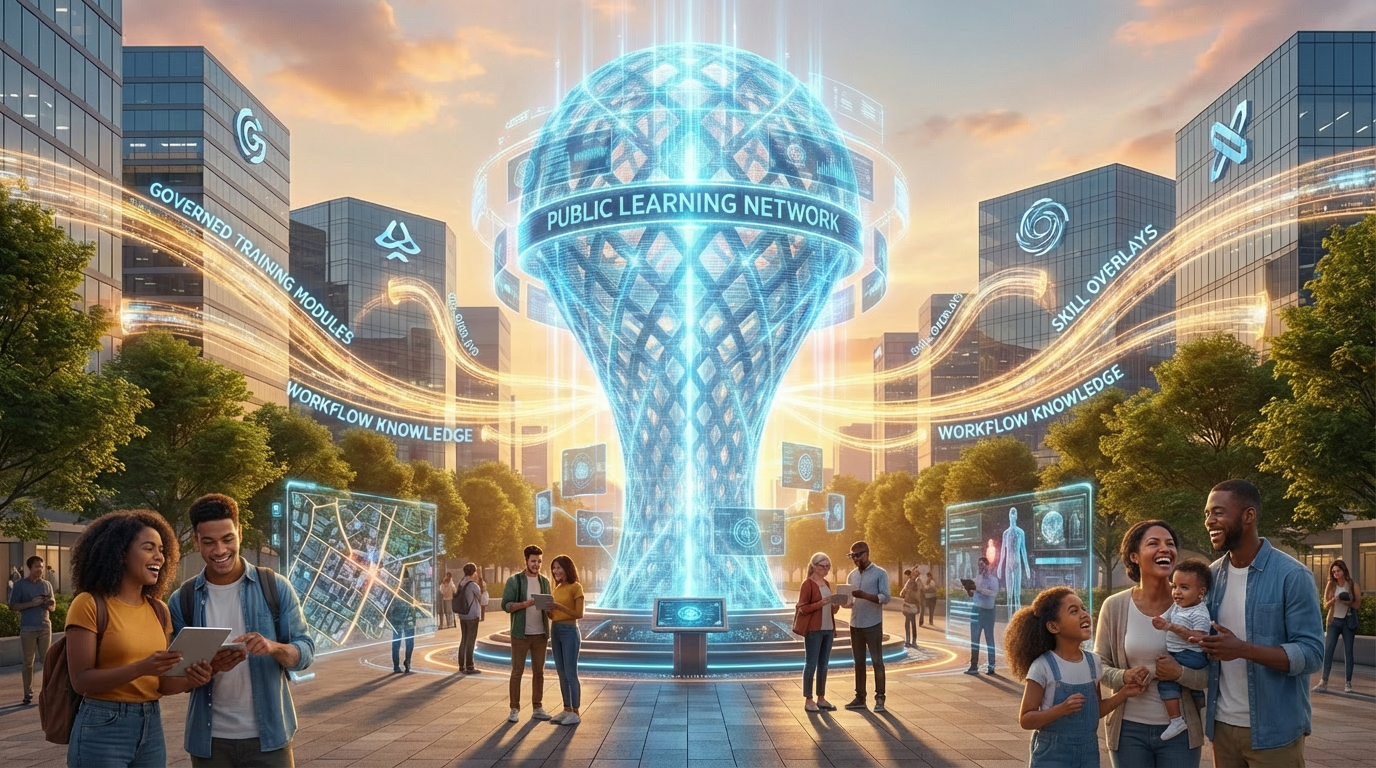
The system will not succeed because the government commands admiration. It will succeed because educational quality and signal fidelity alter the incentives of the institutions that matter.
If the learning experience is genuinely strong, people will use it.
If the assessments are trusted, employers will rely on it.
If the competency map is richer than a résumé, universities and companies will actively scout it.
If the pathway is free, millions will enter it.
If the standards are rigorous, the credential will become difficult to dismiss.
This is the true adoption logic. The AI learning system should not be sold as an ideological weapon against higher education or against the labor market. It should be built as a superior instrument for measuring, revealing, and accelerating human capability.
Once that instrument becomes trustworthy, active scouting is not a side effect. It is the predictable result. Universities will want early access to exceptional minds. Employers will want early access to capable workers. Learners who make their maps visible will be able to move through new opportunity channels that are shorter, faster, and less distorted by the old prestige bottlenecks.
But many employers will not remain passive consumers of talent. Over time, they will want to shape the pipeline directly.
Companies may seek to contribute parts of their own training logic, workflow knowledge, role-specific standards, and professional competency models into the public AI learning architecture itself. In practice, this could take the form of approved industry training modules, specialized preparation tracks, employer-recognized skill layers, or advanced pathway overlays built on top of the public instructional spine. The incentive is clear: if a company can help shape how relevant knowledge is introduced, structured, and practiced before a learner ever enters the job market, it gains earlier access to minds that are already closer to real productivity.
This does not mean that private firms should control the public system or turn it into a patchwork of corporate propaganda. The public framework must remain sovereign over standards, privacy, age-appropriateness, and educational integrity. But within those boundaries, structured industry participation could become one of the most powerful features of the platform.
For younger learners, such contributions could expose students to real-world methods, tools, and problem structures much earlier than the current system allows, making education feel less detached from the world it is supposed to prepare them for. For older learners, employer-contributed pathways could function as bridges into internships, apprenticeships, hiring funnels, and advanced technical roles.
In effect, this would allow the country to shorten the distance between learning and work without collapsing education into narrow vocationalism. The public system would still teach broad foundations first. But as trust grows, industry could begin adding carefully governed layers that allow raw intelligence to encounter real-world complexity earlier, absorb it faster, and convert it into usable capability before the traditional hiring bottlenecks ever appear.
That is how the system begins to close the intelligence gap: not by flattening standards, but by making real ability easier to detect, easier to cultivate, and harder to ignore.
Outcomes
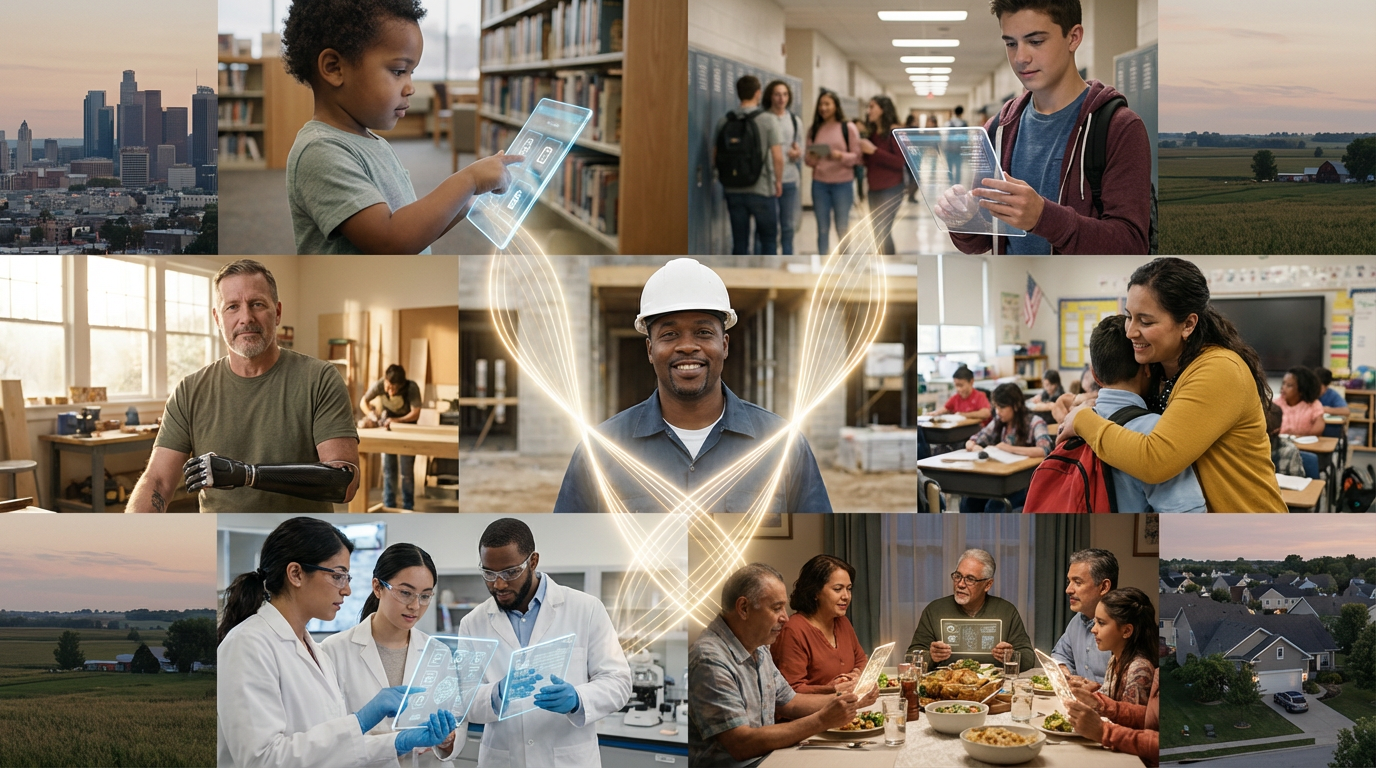
The outcomes of such a system could be significant not only for individuals, employers, universities, government, and society as a whole, but for the entire educational pipeline from childhood through adulthood.
For individuals
It would mean zero-tuition access to high-quality learning across a substantial range of cognitively driven fields, beginning not only at the college or career stage, but much earlier. Adults could retrain without debt. Teenagers could advance according to their actual pace rather than the pace of a classroom. Children in weaker school districts could gain access to the same core instructional quality as children in wealthier ones. Formerly incarcerated people seeking to rebuild their lives could reskill and generate a visible, verified record of competence that is richer than a résumé alone. Talented people currently buried by geography, money, timing, criminal history, or institutional gatekeeping could become visible far earlier in life. The system would not merely lower the cost of reinvention. It would widen the path into learning from the beginning.For primary and secondary education
The effects could be especially powerful. A national AI learning layer could reliably deliver standardized, adaptive, high-quality instruction across K-12 core subjects, helping modernize and stabilize the academic foundation available to students in every region of the country. This would not eliminate the need for schools, teachers, supervision, or community institutions, but it could dramatically reduce inequality in the knowledge layer itself. A student in an impoverished district, a rural town, or an unstable home environment could still gain access to the same explanations, pacing, practice, and feedback as a student in a far better-funded environment. In that sense, the system could serve as an equalizing force, raising the national floor of learning and automatically uplifting communities that have been structurally underserved.For employers
It would mean better hiring signal, lower retraining costs, and a larger field of visible talent. Hiring would become less dependent on pedigree gambling and more dependent on evidence of real ability, real retention, and real growth over time. Employers would be able to see not only what a person claims to know, but what they have repeatedly demonstrated, how quickly they learn, and where their strongest competencies actually lie.For universities
It would mean access to a national scouting layer that reveals not just grades, but patterns of intelligence in motion. High-performing learners could be identified earlier, sometimes years before they would traditionally appear in a college admissions funnel. Universities could recruit from a richer and more dynamic picture of talent, drawing gifted learners into advanced programs, research tracks, accelerated certification, or degree-completion pathways with greater confidence.For government
It would mean broader educational access, faster workforce adaptation, stronger K-12 standardization at the instructional level, and a larger technically capable population over time. It would create a public learning infrastructure that supports both immediate workforce needs and long-term national competitiveness. It would also offer a way to modernize the educational spine of the country without waiting for every local institution to solve the problem alone.For society
It could mean something deeper still: a reduction in the distance between intelligence and opportunity across the full arc of life. A stronger public learning system weakens expensive gatekeeping, normalizes lifelong learning, and helps a rapidly changing economy remain softer and more adaptive rather than more brittle and exclusionary. It would allow learning to begin with stronger foundations in childhood, continue through adolescence into higher education, and remain alive through adulthood as a lifelong record of growth. In that sense, the system is not merely a replacement for parts of college. It is the beginning of a more continuous, more visible, and more equitable architecture of human development.
Risks and Safeguards
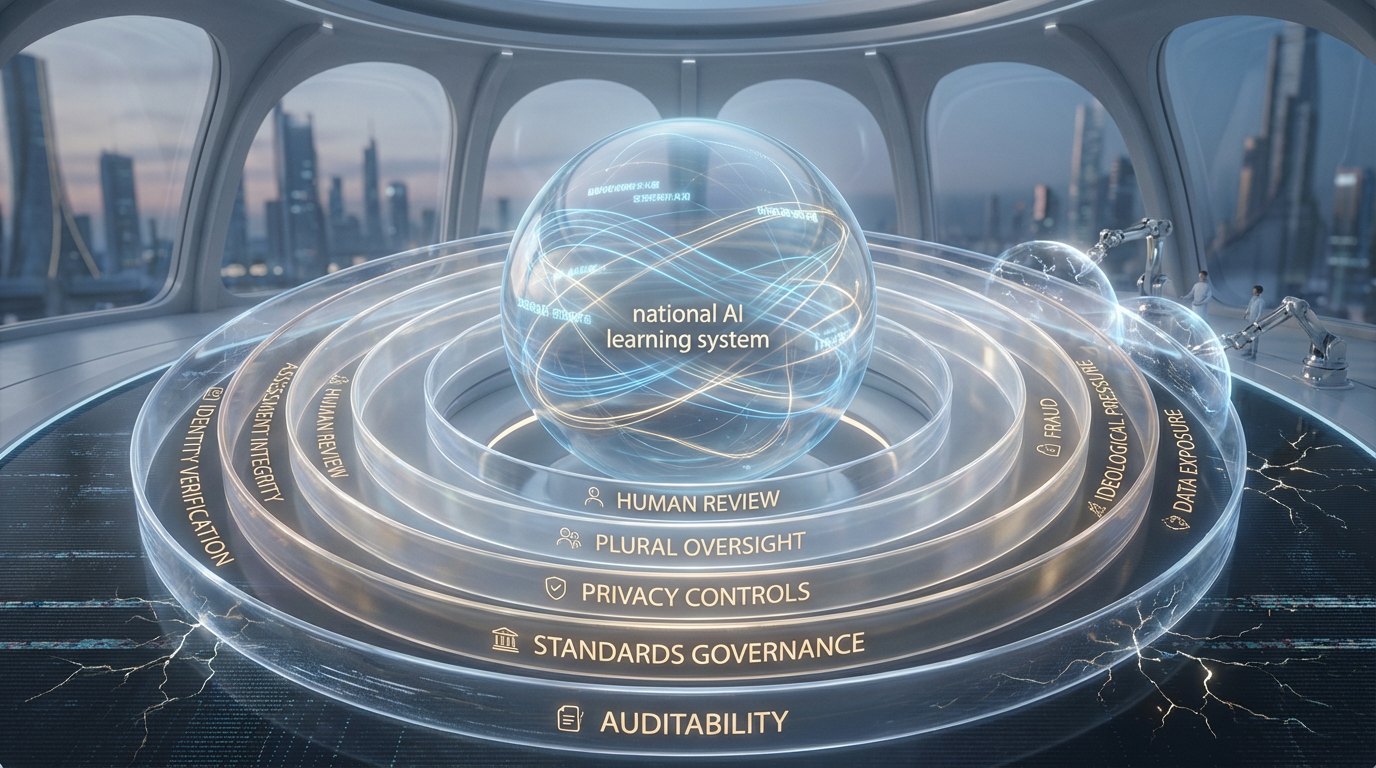
No serious proposal should pretend there are no risks. But the major risks attached to a national AI learning system are not mysterious, and most of them can be reduced substantially through deliberate design.
Fraud
If identity verification and assessment integrity are weak, the public credential loses value. The mitigation is straightforward: official credential-bearing work should rely on layered trust mechanisms, including identity proofing, device trust, phone and camera verification where appropriate, integrity logs, randomized oral-defense checkpoints, and periodic human audit of high-stakes milestones. Informal learning can remain open and flexible, but official advancement markers must be defensible.Ideological capture
If curriculum review becomes openly partisan, doctrinal, or captured by narrow factions, public trust will erode quickly. The mitigation is plural oversight and transparent standards. Review boards should be broad-based, publicly accountable, politically balanced where relevant, and oriented around mastery, evidence, and subject integrity rather than ideological fashion. Standards, revision histories, and approval logic should be transparent and auditable so that control over the intellectual spine of the system never rests with an unaccountable few.Metric distortion
A poorly designed system could reward conformity, speed, and superficial fluency while missing originality, unusual reasoning, long-horizon retention, creative synthesis, and slow-burning brilliance. The mitigation is to measure learning through multiple forms rather than through a single score. Timed exams should be only one layer. Oral defense, project work, revision quality, retention checks, cross-domain transfer, and structured opportunities for nonstandard problem solving should all be built into the record. The system should reward depth and durability, not merely fast compliance.Overreach
If the platform claims too quickly that it can replace educational pathways in heavily regulated, clinical, or physically intensive professions, backlash will be justified and credibility will suffer. The mitigation is disciplined phasing. The system should begin only where the instructional layer can already be delivered with high confidence and where physical or licensure-bound requirements do not dominate the pathway. Expansion into hybrid or tightly regulated fields should occur only through supervised partnerships, incremental validation, and clear public boundaries.Vendor lock-in
If one private provider becomes the unquestioned gatekeeper of public educational infrastructure, the country simply trades one dependency for another. The mitigation is a standards-based public framework. The government should control competency models, assessment structures, record formats, privacy rules, approval criteria, and interoperability. Private firms, including leading AI providers, can power major parts of the system, but no single firm should own the public learning spine.Privacy overreach
Especially once the system begins in childhood and continues across a lifetime, a living learning record could become invasive if visibility rules are careless. The mitigation is controlled visibility: private by default, public by choice, stronger protections for minors, permissioned sharing for schools and institutions, and clear separation between exploratory learning and official credential records. A system that tracks human capability should never reveal sensitive learning information to the wrong audience, particularly in ways that invite parents, institutions, or peers to judge children prematurely or unfairly.
These risks are real, but they are manageable if the architecture is designed with humility, auditability, layered safeguards, and room for human judgment. The system must reward deep understanding, not only fast response. It must preserve space for creative problem solving, cross-domain brilliance, and nonstandard intellectual styles. It must remain open to scrutiny, revision, and public accountability. If those conditions are built into the foundation, risk does not disappear, but it becomes governable rather than disqualifying.
Phasing

The proposal should be implemented in stages.
Build the public learning platform.
The first phase should build the platform itself, including the core instructional layer for K-12 academic subjects, open-access ghost mode, the foundational assessment framework, and the core competency architecture that will support lifelong learning records over time. This phase should focus on proving that high-quality, adaptive, AI-native instruction can reliably strengthen and modernize the academic knowledge layer across primary and secondary education while also establishing the public interface of the system.Establish formal standards and first-wave credentialing.
The second phase should establish expert-review boards, government certification standards, age-appropriate identity and integrity systems, and the first formal higher-education and workforce pathways in domains whose instructional core can already be delivered almost entirely through AI. This is the phase in which the system begins moving from public instructional infrastructure into formal public credentialing.Create the opportunity layer.
The third phase should create employer-facing competency dashboards, university scouting interfaces, and articulation agreements with community colleges, public universities, and accredited online institutions so that high performers can convert public AI learning into formal credit, accelerated degree completion, advanced placement, or direct talent-pipeline opportunities. At this stage, the system begins to reshape how talent is discovered, recognized, and pulled into opportunity.Extend into hybrid and regulated domains.
The fourth phase should expand the system into fields that require both digital instruction and supervised physical training, especially those governed by licensure, clinical standards, or other formal oversight. Implementation in these areas should proceed only through carefully supervised partnerships, incremental validation, and clear evidence of readiness.
This sequencing matters. It allows legitimacy to develop through demonstrated results rather than overstatement. It also ensures that the system begins where it can provide the clearest near-term public benefit: strengthening foundational learning early, then extending into higher education, workforce preparation, and lifelong development.
The Deeper Shift
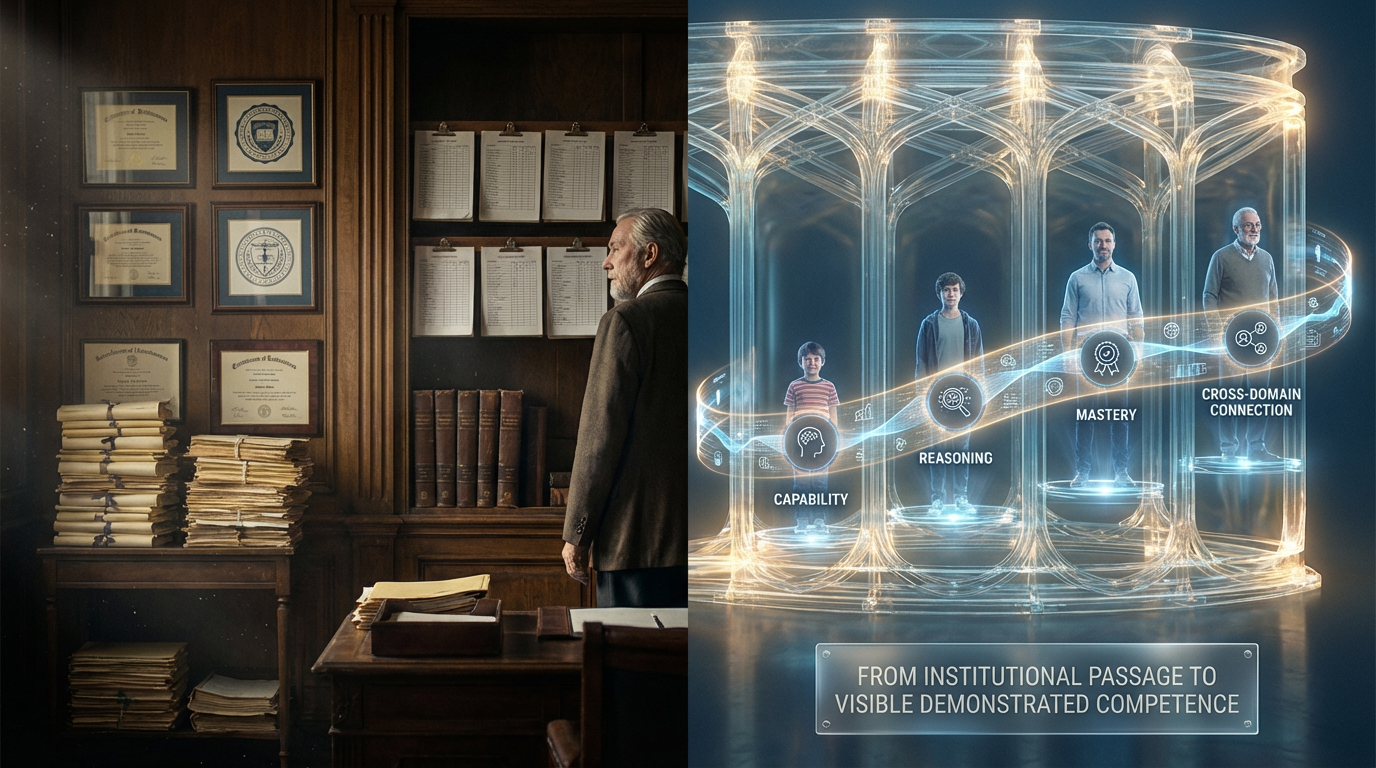
At its deepest level, this proposal is not just about software, automation, or cheaper delivery. It is about replacing the unit of trust in education across the full arc of life.
The old unit of trust is institutional prestige, credit hours, transcript sequence, and degree title. The new unit of trust could become verified demonstrated competence over time.
That is the true shift on offer.
A living learning record does not simply say that a person once passed through a gate. It shows what they have built inside themselves, how well it holds, how it grows, how they recover from difficulty, and how their knowledge connects across domains. It lets society see learning as structure rather than as ceremony.
This shift begins earlier than college. In childhood, it means replacing uneven access to strong instruction with a more consistent public academic layer. In adolescence, it means making unusual ability easier to detect and support. In adulthood, it means allowing retraining, specialization, and continued growth to remain visible and legible rather than disappearing into disconnected credentials and résumé fragments.
That is what makes the proposal more humane than the current system. It gives more people more chances to prove what they are, regardless of geography, timing, money, or institutional gatekeeping. It is more efficient because it reduces blind guessing in hiring, admissions, and workforce development. It is more truthful because it tracks whether learning endured, deepened, and remained usable rather than merely whether it once occurred in the presence of an institution.
In that sense, the proposal does not merely modernize education. It changes what counts as educational proof, replacing a static record of passage with a living record of capability.
Conclusion
America should build a free, government-certified AI learning system for domains that can already be taught with high confidence through AI-native instruction, using expert-validated coursework, secure identity and integrity systems, and living learning records that show what a person truly knows, retains, and can do over time.
But the deepest power of such a system does not begin at the college gate. It begins much earlier.
The first and most immediate use of a national AI learning platform could be to strengthen, modernize, and in many cases substantially replace the instructional delivery of primary school and high school academic content. Such a system would not need to erase local schools, teachers, or communities. It could instead function as a national learning spine: a shared, high-quality instructional layer that ensures every student, regardless of zip code, has access to clear explanations, adaptive pacing, real-time feedback, and rigorous mastery tracking.
That alone would be transformative.
At present, educational quality in America is uneven in ways that are not merely inconvenient, but civilizationally expensive. Wealthy districts often provide stronger instructional support, more stable environments, better materials, and better access to academic acceleration. Poorer communities are too often handed stale textbooks, overcrowded classrooms, inconsistent instruction, and systems that confuse endurance with opportunity. A national AI learning framework could soften that inequality immediately by making the quality of explanation, practice, remediation, and pacing less dependent on geography and household income.
It would create, for the first time, a realistic path toward a more unified educational floor across the country.
A child in a poor rural district, a child in an unstable urban district, and a child in an affluent suburb could all have access to the same core instructional engine, the same adaptive tutoring, the same mastery checks, and the same opportunity to move faster when ready or slow down when needed. That would not solve every social problem, nor would it remove the importance of family, nutrition, safety, mentorship, or community life. But it would strike directly at one of the cruelest asymmetries in the American system: the fact that the quality of foundational learning is still too often rationed by circumstance.
And once such a system exists at the K-12 layer, the higher-education and workforce layers follow naturally.
The same learner who uses the platform to master mathematics, reading, writing, science, civics, computing, and communication in childhood could carry that record forward into adolescence, early specialization, advanced study, and adult life. Instead of being pushed off a cliff between high school and college, they would remain inside a continuous developmental arc. Higher education would no longer feel like a separate kingdom entered only through debt, paperwork, and institutional permission. It would become the next layer of the same lifelong structure.
That continuity matters.
It means the learning record does not die when a semester ends. It does not vanish when a diploma is awarded. It does not become inert the moment a person enters the labor market. It keeps moving. It keeps evolving. It keeps deepening. The platform becomes not merely a school, but a lifelong companion to human development, capable of helping a person master foundational education, enter professional training, retrain mid-career, explore adjacent fields, and continue growing long after the old degree system would have frozen them in place.
This is why the proposal is larger than “free college,” and larger than “AI in the classroom.” It is a proposal to build a public learning infrastructure that follows the individual across the full arc of life.
In childhood, it equalizes access to foundational knowledge.
In adolescence, it accelerates talent and reveals unusual ability.
In adulthood, it supports retraining, specialization, and upward mobility.
Across a lifetime, it becomes a living ledger of understanding rather than a handful of disconnected paper credentials.
That is the real horizon.
If America builds this well, it will not merely reduce tuition or speed up job training. It will modernize the country’s educational nervous system. It will create a stronger national baseline of literacy, reasoning, and technical competence. It will help uplift impoverished communities by delivering a higher floor of instructional quality directly to the learner. It will allow gifted students to rise sooner, struggling students to receive more precise support, and adults to reenter learning without shame or financial punishment. It will also make real ability easier to see, easier to cultivate, and harder for universities, employers, and institutions to ignore.
Most of all, it will shift the meaning of education itself.
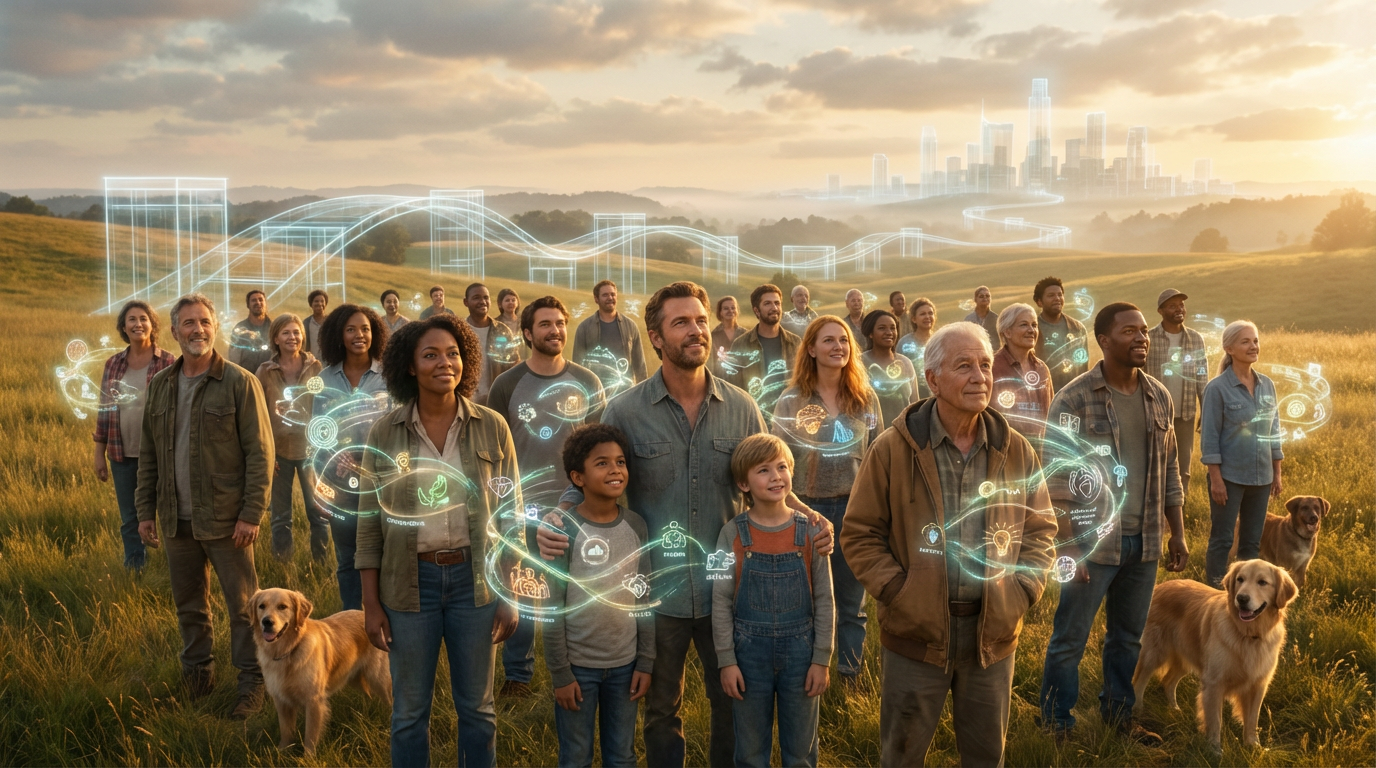
Education will no longer be defined mainly by where you sat, how long you stayed, or what institution stamped your passage. It will be defined by what you actually know, what you can actually do, how deeply you retain it, how clearly you can demonstrate it, and how powerfully you continue to grow.
The degree of the future should not be a static relic from a closed institutional corridor. It should be a living map of capability that begins in childhood, expands through higher education, and follows the citizen for life.
The nation that builds this first, and builds it well, will not merely educate more people. It will gain a lasting advantage in the cultivation, identification, and deployment of human capability.
If the United States leads, it will raise the floor domestically, widen the ladder of opportunity, and compress the distance between talent and useful contribution. But the larger consequence is strategic. It will establish the dominant model for how advanced societies train their populations, identify exceptional minds early, and convert learning into national power. That standard will not remain domestic for long. Other nations will adopt it, adapt it, or compete against it. If America builds it first, then America defines the template. And if that template is rooted in openness, broad access, visible merit, and institutional strength rather than closed systems and opaque control, then educational leadership becomes a powerful form of soft dominance. By exporting capability-building systems, training partnerships, and public learning infrastructure to developing nations, the United States could help shape rising generations of workers, builders, and leaders in ways that strengthen those societies while also deepening long-term alignment with American models of advancement.
It is also worth noting that once universities begin recruiting from AFLN, many of them will also feed their own advanced coursework, research methods, and institutional strengths back into the network. Over time, this could turn AFLN into a distribution layer for the highest forms of academic training, no longer constrained by campus walls or legacy gatekeeping. A gifted child in Africa, India, or rural America could one day unlock advanced Harvard-level or MIT-level coursework through demonstrated ability, as if moving into a new level of the world’s educational architecture.
That is not a minor upgrade. It is a civilizational shift: a future in which great institutions no longer have to wait for brilliance to arrive at their gates. They gain access to exceptional minds at the point of emergence, wherever those minds are born. If their coursework, frameworks, and methods are approved inside the system, those institutions can begin shaping talent early, when intellectual loyalties, habits of reasoning, and standards of excellence are still being formed. That kind of imprint has strategic value. It creates prestige that compounds, influence that travels, and an international foothold that is deeper than marketing because it is built into the formative development of the world’s most capable people. In that sense, America would not merely export education. It would export American thought processes and the channels through which excellence itself is cultivated.