Cycle Log 28
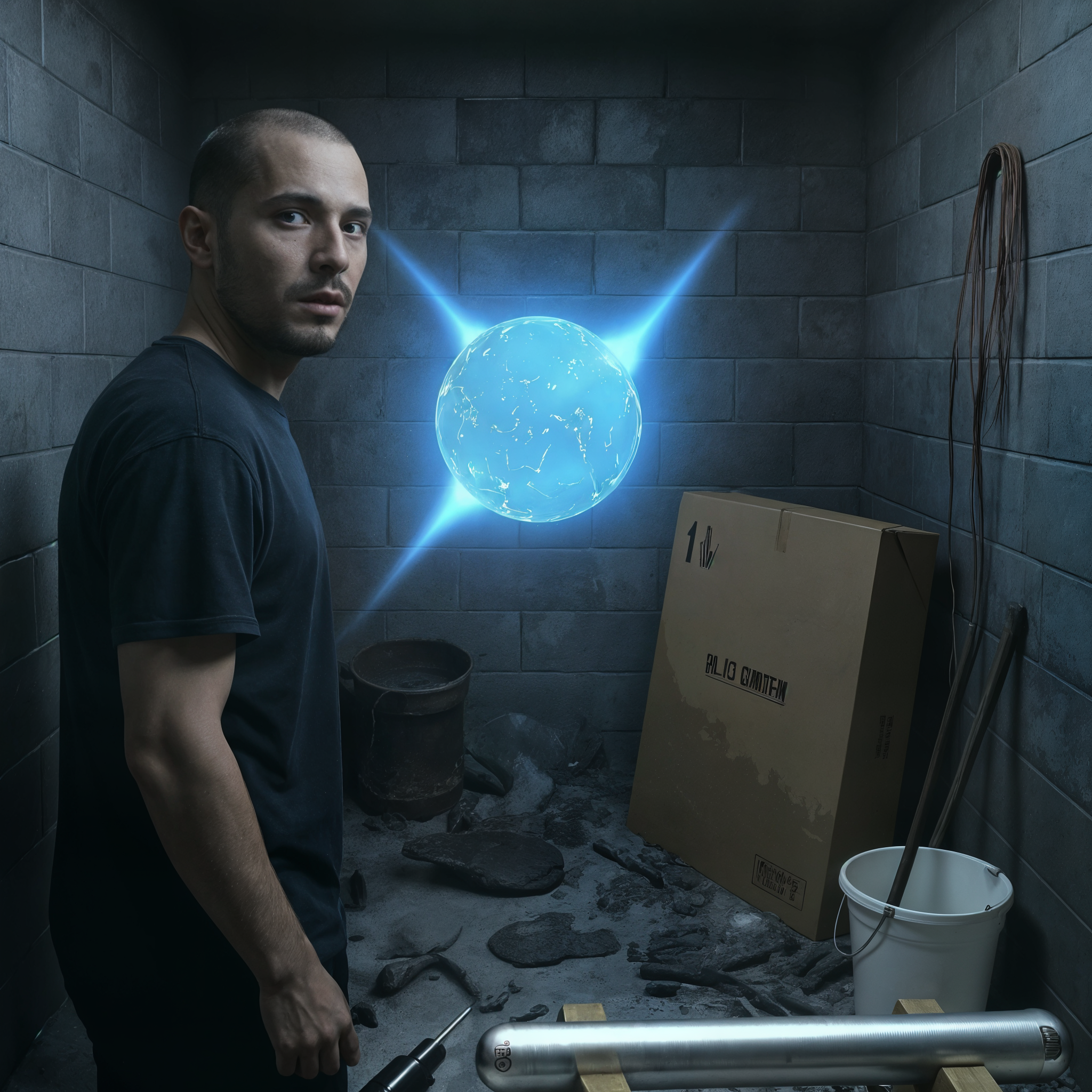
One scared man, set against his own destiny, embarks on a journey he will never recover from.
THE JAMES HARLAN / HARLIN INCIDENT:
A Theoretical Investigative Analysis of Behavior, Environment, and Unknown Natural Phenomena
Disclaimer:
This analysis is entirely hypothetical. Nothing in this post should be interpreted as a verified claim about real people, real events, or real objects. The information discussed here is based solely on publicly available online content of uncertain authenticity. This write-up represents an analytical exploration of the narrative as presented online, not an assertion of fact.
Prologue:
Why “Supernatural” is a Misleading Term, and Why Unknown Phenomena Must Be Classified as Natural Until Proven Otherwise
In public discourse, events that defy existing scientific models are often labeled “supernatural,” implying impossibility, irrationality, or magical thinking. This terminology is counterproductive. Historically, almost everything once considered supernatural — ball lightning, meteorites, deep-sea organisms, radioactivity, even aerodynamics — eventually entered the domain of natural science once the instrumentation caught up.
For that reason, this paper treats all anomalous events described herein as natural but currently unexplained, belonging to the category of insufficiently understood natural phenomena rather than anything metaphysical. The most conservative scientific approach is to assume:
The phenomenon has a natural cause.
Our models are incomplete.
Further study is warranted.
This protects inquiry from premature dismissal on one side and ungrounded mythology on the other.
Everything below should therefore be considered theoretical, not factual, not diagnostic, and not a statement about a confirmed real person. We proceed under the assumption that if this was a staged project, we are simply analyzing its narrative structure; if it was real, we are analyzing it respectfully.
I. Introduction: The Case and Why It Matters
This paper examines the online persona known as James Harlan (or Harlin) and the sequence of events culminating in an apparently catastrophic livestream during which he attempted to drill into a mysterious cylindrical metallic object he retrieved after traveling through Nevada. The footage includes:
a sudden intense brightening of an overhead shop light,
a blue luminosity appearing on the object’s surface,
a hovering orb of contained light behind him,
an immediate loss of motor control,
a collapse,
and a prolonged 27-minute period (22:17 → 49:49) of camera downtime filled with intermittent illumination patterns and a single loud metallic impact not consistent with the collapsed camera’s position.
This paper attempts to:
evaluate his psychological state,
examine environmental clues,
analyze the naturalistic anomalies,
contextualize the orb in relation to known UAP-adjacent phenomena,
and explore behavioral, symbolic, and situational factors that likely contributed to his final decision.
II. Observational Background: Who James Appeared To Be
Based on the cumulative record of his uploads, livestreams, commentary, and interactions, James presented as:
Socially isolated
No mention of a partner, children, or close social network aside from one friend who lent him a basement for storage.
Emotional dependency on online viewer interaction.
Economically limited
Lived with or near his father.
Not well-equipped with high-end tools; used his father’s tools and workspace.
Environment often showed clutter, lack of resources, and improvisation.
Psychologically strained
Repeated fears of government surveillance (CIA, etc.).
Chronic anxiety, sleep disturbance, intrusive nightmares.
Oscillation between dread and performative bravado.
Craving validation
Posted daily “proof of life” videos.
Repeatedly said variations of “I’m alive, don’t worry, I’m okay.”
Livestreams contained little actual “preparation” — he simply wanted an audience to witness him.
Spiritually / intuitively conflicted
Verbalized repeatedly that the object gave him “weird feelings.”
Expressed feeling “warned,” “watched,” or “told to stop” by intuition but overrode it every time.
Explicitly said: “I hope someone is recording this in case I die.”
This was not theatrical polish — it was the unstructured, unfiltered rambling of someone overwhelmed by a situation far beyond his comprehension. He was not a skilled actor, speaker, or storyteller. His narrative had none of the clean beats of staged fiction. It was chaotic, nonlinear, naive, and raw.
III. Environmental Indicators: Where He Traveled and Lived
A. Nevada Context (Retrieval Phase)
He appears to have acquired the object somewhere in a desolate, scrub-covered region resembling Nevada desert terrain (this is supported by a screenshot he posted showing the cylinder in the sky over such an area).
B. Travel Routes and Evidence
Casino footage (Nevada)
Long solitary drives
Mile marker 233
A “PRESHO” billboard → South Dakota connection
Very barren landscapes with low vegetation
Descriptions of “backroads for miles” with “nobody around”
C. Storage Location
He did not store the object in his own home.
He stored it in a friend’s basement, likely because he feared governmental attention, AND because the object caused him distress during sleep when it was nearby.
D. Sleeping in His Car
While transporting the cylinder, he slept in his vehicle and:
Had nightmares every 10 minutes
Reported overwhelming dread
Reported temporary physical symptoms
Noted that the nightmares stopped once he stored the object in a separate location
This pattern strongly suggests environment-linked physiological or psychological loading.
IV. The Object Itself: Form, Behavior, and Risk Factors
Based on his descriptions and videos, the cylindrical object:
Contained multiple, well-engineered internal components within a single housing — the end caps were magnetic, yet the cylindrical body itself was not.
Appeared artificially manufactured and featured markings or runes resembling ancient cultural languages.
Was unusually resistant to conventional attempts at damage, such as burning with a blow torch or striking it with rocks.
May have emitted low-level energy that affected mood, sleep, and overall physiological state.
Produced a “hot,” radiation-type burn sensation when he first attempted to extract it from the sand.
Triggered recurring nightmares and a persistent sense of dread during periods of close proximity.
Caused dramatic, unexplained environmental lighting changes during the drilling attempt.
Generated a blue, self-contained luminosity behind him immediately before his collapse — after first appearing on the surface of the object directly under his drill light.
From a strictly naturalistic standpoint, even a human-made device containing certain materials (pressurized gases, capacitors, batteries, specialized shielding compounds, or exotic alloys) could theoretically cause:
Electrical discharge
Ionizing emissions
Localized thermal anomalies
Chemical or vapor outgassing
Electromagnetic interference
However, the overall pattern he encountered does not align cleanly with typical industrial failure modes or known mechanical hazards.
V. The Blue Orb: Surface Illumination → Hovering Light Phenomenon
A. Phase 1: Surface Illumination Event
As James drilled into the cylinder:
The yellow overhead shop light abruptly grew 2–3× brighter, shifting toward a white spectrum in a way far beyond normal incandescent or LED bulb behavior.
A blue luminous spot appeared on the object’s surface, positioned directly beneath the reflected line of light cast by the cordless drill’s built-in blue LED.
This blue spot moved and distorted in perfect sync with camera shake and motion blur, showing the exact physical behavior expected from a true light interaction captured in-camera — strongly suggesting it was not a digital addition, especially under the limitations of a YouTube Live stream.
The patch functioned like a stable emission zone, maintaining coherence and brightness, rather than behaving like a simple specular reflection or scattered light artifact from the drill’s LED.
B. Phase 2: Camera Turn → Hovering Blue Orb Behind Him
Sensing immediately that something was wrong, James instinctively rotated the camera to look behind him.
At the moment of rotation:
A blue orb of contained light was visible hovering behind him, in a fully enclosed basement space, at approximately head height or slightly above, roughly 4–6 feet from the camera.
The orb cast no shadows on any surface.
It failed to intensely illuminate the room, the walls, objects, furniture, or James himself (off camera)
Its luminosity was entirely internally contained, which is a hallmark of certain rare natural plasma formations and many documented cases of UAP “self-contained photon emission.”
The orb maintained stable color, shape, and saturation, exhibiting none of the blooming or lens-flare artifacts typical of normal light sources in small spaces.
Upon seeing it, James immediately entered a panic reflex: repeatedly saying “no no no no no”, then attempting to say “sorry” and “I didn’t mean to do that,” though his speech degraded mid-sentence into an unintelligible slur.
He then collapsed to the floor, dropping the camera, triggering the beginning of the 22:17–49:49 post-collapse blackout segment.
This sequence — the blue orb’s appearance, its physical properties, James’s neurological decompensation, and the collapse — is one of the most significant and anomalous features of the incident.
VI. Collapse and Immediate Physiological Failure
His reaction was instantaneous and severe:
Speech disruption
Motor loss
Immediate full-body collapse
Zero attempts to brace himself
Zero post-collapse movement
These symptoms align with:
Acute EM neuronal interruption
Short high-energy discharge exposure
Neural depolarization event
Seizure onset from an external stimulus
Catastrophic neurological overload
None of these produce “acting quality” movements. They are involuntary, uncontrolled, and terrifyingly real.
VII. The 27-Minute Camera Aftermath (22:17 → 49:49)
After the camera hit the floor face-down:
A. Intermittent Light Patterns
Screen shifting from pure black → dim illuminated fog → sharp linear intrusions of light
Pulsating illumination in the center of the screen
Patterns appearing inconsistent with normal electronic malfunction
B. Equipment Cycling
The camera powered off and on without external input
Audio intermittently captured faint background noise
No human sounds, movement, coughing, or groaning
C. The Metallic Impact
At one point, a single loud metallic bang occurs.
It does not match:
the acoustics of James moving
the acoustics of the camera shifting
the environment as previously seen
This suggests an external disturbance, structural shift, or object-based mechanical event.
D. Absence of Rescue or Response
Nobody entered the room.
No voices.
No footsteps.
No return of the streamer.
The silence is the most concerning piece of the timeline.
VIII. Behavioral Psychology: Why He Continued Despite Warnings
James exhibited the following pattern:
A. Fear + Curiosity Conflict
He was terrified of:
the government
the object
the unknown
Yet he was more terrified of irrelevance, invisibility, and not being witnessed.
This is classic conflicted compulsion.
B. Desire for Intervention
Over and over he said variations of:
“I wonder if someone is going to stop me.”
“I hope someone shows up.”
“Maybe the government will take it.”
He wanted to feel significant — wanted someone to acknowledge the danger.
C. Projection of Depressive Intuition
Statements like:
“I’m just going to end this.”
“I can’t handle it anymore.”
“Time to finish this.”
These do not sound like a man resolved to live.
They sound like a man looking for:
fate
judgment
consequence
or release.
D. Misinterpreting Signs
The shattered windshield (likely rock impact) became, in his mind, a bullet or attack.
Ironically, this event should have been interpreted as a warning — a symbolic moment of danger — but he externalized it incorrectly, feeding paranoia rather than self-preservation.
E. Psychological “Staging of Destiny”
James was not intentionally fabricating a hoax, nor was he consciously constructing a dramatic storyline for attention. Instead, his behavior reflects a deeper subconscious pattern: he was drifting into a scenario that resembled a “final act,” almost as if he felt compelled toward an outcome he didn’t fully understand.
This dynamic is recognizable in individuals who feel overwhelmed, isolated, or powerless. They begin to interpret their circumstances as if they are part of a larger, unavoidable trajectory — a kind of fatalistic momentum where each step feels preordained. For James, this manifested through:
Repeatedly expressing that he expected someone to intervene, yet continuing anyway.
Speaking as though events were unfolding to him, rather than being chosen by him.
Framing fear, dread, and resignation as signs of destiny rather than warnings to stop.
Treating the drilling as a culminating act — something he had been building toward, almost ritualistically, for days.
In effect:
He did not stage a hoax — he subconsciously staged his own ending.
Not through deliberate planning, but through a slow psychological surrender to forces he felt were larger than himself.
It wasn’t premeditated performance.
It was involuntary fatalism.
IX. UAP Consistency Checklist (Naturalized Interpretation)
This incident shows strong overlap with numerous natural-but-poorly-understood phenomena described in historical UAP case records.
Several characteristics match almost point-for-point, and each has precedent:
• Contained light that fails to illuminate its surroundings
James: The blue orb illuminated itself, not the walls or objects.
Literature Parallel: The Minot AFB (1968) security reports describe an orb “bright as welding arc” yet casting no ambient light. Similar “self-contained luminosity” was documented in the Belgian Wave (1989–1990) where witnesses described balls of light that “glowed internally” without lighting the environment.
• Light appearing in mid-air, maintaining a stable geometric shape
James: A hovering, spherical, solidly bounded orb behind him.
Parallel: The Foo Fighter reports (WWII) repeatedly described mid-air spheres of light that held fixed form and position. The RB-47 radar/visual case (1957) includes a luminous object maintaining shape while pacing the aircraft.
• Sudden electromagnetic interference disrupting electronics
James: Environmental lighting changes and a camera collapsing, powering off/on.
Parallel: In the Coyne Helicopter Incident (1973) the flight crew reported complete EM disruption of all avionics. The Cash–Landrum case (1980) involved engine failure and radio blackout near a bright object.
• Neurological disruption, including collapse or seizure-like events
James: Near-instant speech loss, collapse, involuntary body shutdown.
Parallel: The Trans-en-Provence case (1981) involved a witness experiencing motor disruption and temporary paralysis. In Val Johnson’s 1979 patrol car incident, the deputy experienced disorientation and partial blackout after a close approach to a luminous sphere.
• Fear, dread, and nightmares when in proximity to the object
James: Nightmares every 10 minutes while sleeping near the cylinder.
Parallel: The Skinwalker Ranch diaries (1990s) reference overwhelming dread and sleep disturbance near energetic anomalies. Similar “fear induction” appears in the Brazilian Colares (1977) case where witnesses reported nightmares following encounters with luminous objects.
• Object-surface activation under mechanical disturbance
James: Blue luminosity on the cylinder after drilling, followed by orb appearance.
Parallel: The Utsuro-bune iron object account (early 1800s Japan) describes markings activating under touch; modern plasma research notes “field blooming” when metallic surfaces are mechanically stressed near energy sources.
Also similar to the Lonnie Zamora (1964) landing site, where ground disturbance correlated with anomalous burn marks and luminous residue.
• Mechanical noise or impacts emitted by the object afterward
James: A loud metallic bang during the post-collapse blackout.
Parallel: The Mansfield, Ohio (1973) helicopter case recorded a similar metallic “ping” after the luminous object retreated. The Falcon Lake Incident (1967) also includes unexplained metallic knocking sounds preceding physiological effects.
• Disturbance or anomalous events during long-distance transport
James: Dread, nightmares, windshield strike, physical symptoms while traveling.
Parallel: Numerous truck driver UAP encounters (1960s–1980s) describe objects pacing vehicles, causing nausea, panic, and road events. The Cash–Landrum witnesses also experienced worsening symptoms during transport away from the encounter site.
• Physiological burns without visible external heat source
James: “Hot” radiation-like burn during first extraction from the sand.
Parallel: The Cash–Landrum case produced radiation-type burns with no visible flame or heat source. The Colares victims also received burn-like lesions from luminous beams. Ball lightning encounters have similarly caused skin heating without scorching clothes.
None of these features require an extraterrestrial explanation.
They all fit within a category of natural but unclassified:
plasma behavior,
energy–matter interaction,
exotic charge buildup,
or materials science phenomena not yet understood.
But the number of matching points appearing together — in one continuous sequence — is exceptionally unusual.
X. Why Agencies Would Not Intervene (Three Stages of Non-Intervention)
If official bodies were aware, several motivations explain inaction:
1. Containment Through Expectation
If the object type is known to be self-regulating or dangerous, and the individual is isolated, an agency may:
avoid public confrontation
avoid escalation
allow the event to “resolve itself”
2. Strategic Non-Involvement
Intervening could:
cause panic
reveal classified knowledge
create a high-profile confrontation
encourage copycats
risk exposure to hazardous material
3. Loss of Strategic Urgency
If similar objects are already abundant, understood, or accounted for:
a lone civilian having one is no longer a crisis
the risk is localized
retrieval afterward is simple
This is not callous — it is procedural.
XI. Final Interpretation: Natural but Unknown Phenomena and a Fatal Decision
Based on:
his psychological instability,
isolation,
compulsive need for audience validation,
worsening intuition-based fear,
sleep disturbances,
physiological responses,
the anomalous orb,
the dramatic environmental change during drilling,
the immediate collapse,
the 27 minutes of unexplained post-collapse camera behavior,
and the total disappearance afterward,
the most naturalistic conclusion is:
He interacted with an unknown natural energy/material phenomenon and suffered catastrophic neurological failure as a result.
Or, in simpler terms:
He got into something he did not understand, and the phenomenon corrected the intrusion.
This is tragic, not mystical.
And yes —
it is consistent with reports across multiple decades of UAP-adjacent natural anomalies.
XII. Closing Statement
Whether this was the gut-wrenching demise of a lonely man looking for meaning, or the extraordinarily convincing narrative of a hoaxer (unlikely), the incident demands study. It highlights the intersection of:
human psychology,
isolation,
desperation for validation,
hazardous unknown materials,
and anomalous natural phenomena.
This paper does not claim certainty.
It offers only structured theoretical analysis.
But one thing is undeniable:
What happened on that livestream felt real — viscerally real — to countless viewers.
And until further evidence emerges, we must treat it as a powerful cautionary event at the intersection of human fragility and the unknown.